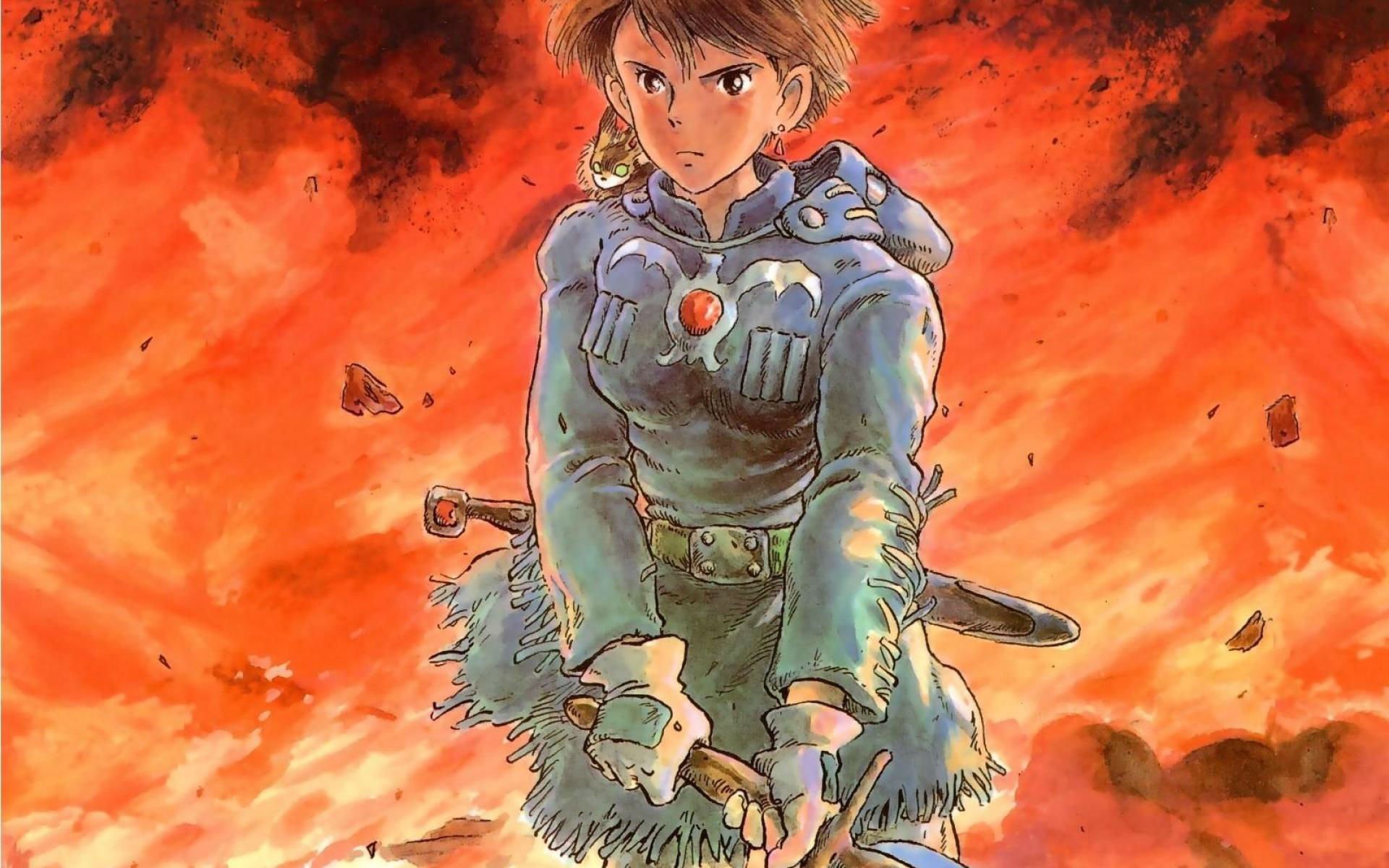
GKIDS and Studio Ghibli confirmed on Wednesday that a series of new global licensing agreements will extend the availability of the Valley of the Wind Anime across North American streaming platforms through 2027. The announcement follows a record-breaking month for the production house after a rare original cel from the film sold for 1.2 million yen at a Tokyo auction. Company representatives stated that the move aims to consolidate the legal digital footprint of their early library as competition among animation-focused streaming services intensifies.
The 1984 film, directed by Hayao Miyazaki, remains a cornerstone of the Japanese animation industry despite technically predating the formal founding of Studio Ghibli. According to data provided by the Motion Picture Producers Association of Japan, the feature originally earned approximately 742 million yen during its initial theatrical run. This performance established the financial foundation necessary for the studio to incorporate as a legal entity one year later in 1985.
The new distribution strategy involves a multi-year partnership with Warner Bros. Discovery to keep the title on the Max platform. Dave Jesteadt, President of GKIDS, said in a press release that the enduring popularity of the work necessitates a stable environment for new viewers. The deal includes high-definition restorations and updated subtitle tracks to meet modern broadcast standards.
Historical Impact of Valley of the Wind Anime
The cultural significance of the Valley of the Wind Anime is often measured by its early environmental themes and its departure from traditional hero tropes of the mid-1980s. Toshio Suzuki, a longtime producer at Studio Ghibli, noted in his memoir that the project faced significant skepticism from investors who doubted a story about ecological collapse could find a commercial audience. The production eventually moved forward after the original manga serialized in Animage magazine proved the concept had a dedicated following.
Industry historians point to the animation techniques used in the film as a bridge between limited television animation and the high-fidelity theatrical style that defined the late 20th century. Writing for the British Film Institute, critics have highlighted how the film utilized hand-painted backgrounds and physical multiplane cameras to create a sense of depth that was rare for its era. The success of this approach allowed the creative team to demand higher budgets for subsequent projects like Castle in the Sky.
The film also marked the first major collaboration between Miyazaki and composer Joe Hisaishi. Their partnership has spanned four decades and dozens of projects, yet Hisaishi frequently cites his work on this specific score as a defining moment in his career. The synthesizer-heavy soundtrack reflected the experimental nature of the Japanese music scene during the early eighties.
Shifting Market Dynamics and Streaming Conflicts
While the domestic Japanese market remains loyal to physical media, international audiences have shifted almost entirely to subscription video-on-demand services. This transition has created friction between traditional Japanese rights holders and Western tech giants. Netflix and Max have engaged in a public bidding war over the Ghibli catalog for several years, which has occasionally led to temporary blackouts in certain regions.
The current agreement ensures that the library remains centralized rather than fragmented across multiple services. Financial analysts at Tokyo-based Nomura Holdings reported that the licensing of "evergreen" content like this provides Studio Ghibli with a reliable revenue stream that offsets the high costs of their current slow-paced production cycles. The studio famously produces only one or two minutes of finished animation per month for its flagship features.
Critics of the current licensing model argue that the high cost of these rights prevents smaller, independent streaming services from offering a diverse range of classic animation. Sarah Watson, a media researcher at the University of East Anglia, stated that the consolidation of classic titles under major corporate umbrellas can limit cultural access in developing markets. These concerns have led to calls for a more open archival system for historically significant films.
Environmental Themes and Modern Scientific Context
The narrative centers on a post-apocalyptic world where a toxic fungal forest threatens to consume the remaining human settlements. While the story is decades old, climate scientists have recently used the film as a reference point for public outreach. A 2023 report from the Intergovernmental Panel on Climate Change discussed the role of speculative fiction in shaping public perception of ecological tipping points.
The concept of the "Sea of Decay" in the film bears a striking resemblance to real-world bioremediation processes. Dr. Kenji Tazawa, a biologist at Kyoto University, noted that the idea of plants purifying a contaminated soil is a legitimate scientific principle used in modern environmental engineering. This alignment between fantasy and reality has helped the film maintain its relevance in academic circles.
Recent screenings at international climate summits have utilized the film to illustrate the consequences of industrial overreach. Organizers at these events claim that the visual storytelling provides a more visceral understanding of environmental degradation than raw data alone. This secondary life as an educational tool has contributed to the steady demand for the film's digital rights.
Technical Preservation and Digital Restoration
Preserving the original 35mm film negatives presents a significant challenge for the Studio Ghibli archive team. Over time, physical film stock can degrade, leading to color shifts and the loss of fine detail. The studio has invested in 4K scanning technology to ensure that every frame is captured in a format that will survive for future generations.
The restoration process involves manually removing dust and scratches while ensuring that the original color palette intended by the directors is maintained. Lead archivist Atsushi Okui has stated in technical journals that the goal is not to make the film look new, but to make it look as it did on its first day in theaters. This philosophy prevents the "over-smoothing" of grain that often plagues digital remasters of older animation.
The technical specifications of the new digital release include a high-bitrate stream that preserves the hand-drawn texture of the original cels. Engineers at NHK have collaborated with the studio to test these restorations on ultra-high-definition broadcasting equipment. These tests ensure that the animation remains crisp even on the largest consumer television screens currently available.
Global Merchandising and the Secondary Market
The financial ecosystem surrounding the film extends far beyond ticket sales and streaming fees. Merchandising remains a primary source of income, with the studio's "Donguri Kyowakoku" retail chain reporting consistent sales for items related to the film's iconic creatures. The "Mehve" glider and the "Ohmu" insects have become some of the most recognizable designs in the history of the medium.
High-end collectibles have seen a particular surge in value over the last five years. Auction houses in Hong Kong and London have reported that original production art from the Valley of the Wind Anime now commands prices comparable to traditional fine art. Collectors view these pieces as historical artifacts rather than simple movie memorabilia.
The rise of the secondary market has prompted the studio to implement stricter authentication protocols for its merchandise. This move protects the brand's integrity and ensures that profits from the intellectual property continue to support the studio's staff and operations. Despite the commercialization, the studio maintains a policy of not over-saturating the market with low-quality goods.
Legal Challenges and Intellectual Property Rights
Managing the rights for a film produced before the current corporate structure was in place requires a complex legal framework. The original production involved a consortium of companies including Tokuma Shoten and Hakuhodo. Navigating the overlapping contracts of these entities has historically complicated international release schedules.
Recent court filings in Japan indicate that the studio has been aggressive in pursuing unauthorized distributors of its content. Legal experts suggest that this protective stance is necessary to maintain the high valuation of their licensing deals with partners like Max and Netflix. Unauthorized "fansubs" and pirate streaming sites have seen a marked decrease in activity following these legal maneuvers.
The studio's legal team has also been active in trademarking specific character designs and names in multiple jurisdictions. This prevents third-party companies from creating unofficial sequels or spin-offs that could dilute the brand. The complexity of these international laws means that the studio employs a dedicated team of intellectual property specialists to monitor global markets.
Future Projections for the Franchise
Looking ahead, Studio Ghibli has indicated that it has no plans for a direct cinematic sequel to the story. Miyazaki has frequently stated his preference for standalone works, although he did continue the narrative in his original manga series for a decade after the film was released. This leaves a significant portion of the story's world unexplored in animated form.
There is ongoing speculation regarding a potential live-action adaptation, following the success of the 2019 kabuki stage play version. While the studio has not officially confirmed such a project, the recent trend of high-budget streaming adaptations of classic titles makes it a frequent topic of discussion among industry insiders. The technical requirements for a live-action version would be immense, requiring advanced practical effects to recreate the film's unique ecosystem.
The next major milestone for the film will be its 45th anniversary in 2029. Analysts expect the studio to announce another round of technological upgrades or perhaps a limited theatrical re-release in IMAX formats to mark the occasion. Until then, the focus remains on maintaining the film's presence in the digital landscape and ensuring that its environmental message continues to reach a global audience.