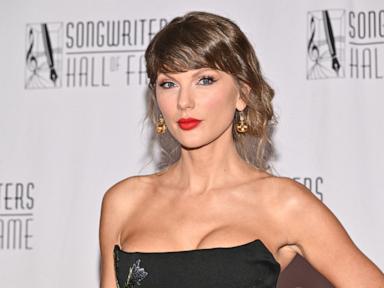
The music industry loves milestones, but most of them are just marketing noise. Last night in New York, however, something genuinely historic happened. Taylor Swift became the youngest woman ever inducted into the Songwriters Hall of Fame. At 36 years old, she shattered a female longevity record that stood for nearly four decades.
If you think this is just another trophy for a pop star who already has a literal room full of them, you're missing the point. This induction isn't about celebrity or chart metrics. It's about a strict, twenty-year veteran rule that forces us to look past the stadium tours and evaluate pure penmanship.
Most coverage of the June 11 gala focuses on her black floral Givenchy dress or who sat next to her. Let's skip the red carpet filler and look at what this moment actually means for the music business, why the Hall of Fame rules make this specific induction so brutal to achieve, and why her peers are panicking about the future of songwriting.
The Brutal Math of the Songwriters Hall of Fame
To understand why this is a massive deal, you have to look at the gatekeeping behind the organization. This isn't the Rock and Roll Hall of Fame, where a committee can arbitrarily nominate a trendy artist on a whim. The Songwriters Hall of Fame has a firm, uncompromising rule: you become eligible exactly twenty years after the release of your first commercial track.
For Swift, that clock started ticking in June 2006 with her debut country single, "Tim McGraw." She didn't just get in eventually; she was voted in on her very first year of eligibility.
- The Female Record: The record for the youngest woman inducted was previously held by Carole Bayer Sager, who was 43 when she entered in 1987. Swift beat that record by seven years.
- The All-Time Record: Stevie Wonder remains the youngest person overall, entering the Hall in 1983 at age 32. Swift now sits comfortably as the second-youngest person in history to achieve this.
- The Peer Group: To put her age into perspective, legendary writers like Bob Dylan and Paul Simon didn't get their nods until their early 40s.
During her 20-minute acceptance speech, Swift didn't hold back about what kept her afloat during two decades in the industry spotlight. "If I look back at my entire 23-year career in music, the ups and downs, the industry battles, the trials and tribulations... songwriting was the easiest thing I ever did," she told the crowd at the Marriott Marquis Hotel.
She described her process as entirely instinctual, something she stumbled into at age 12 when she first picked up a guitar.
The Five Tracks That Sealed the Deal
When an artist is nominated, their team submits a small, specific portfolio of work to represent their catalog. You don't get in based on a single viral hook. You get in on structural mastery.
Swift’s submission package consisted of five tracks that showcase her evolution from a teenage diary writer to a narrative mythmaker:
- "Love Story" – The track that proved she could turn classic literature into global pop currency.
- "Blank Space" – A masterclass in self-satire that flipped media narratives into a rhythmic weapon.
- "All Too Well (10 Minute Version)" – A sprawling, unstructured epic that broke the rule that pop songs must be three minutes long to stay relevant.
- "The Last Great American Dynasty" – A character study that proved she could write compelling narratives that have absolutely nothing to do with her personal life.
- "Anti-Hero" – A deeply insecure, mid-tempo track that turned self-loathing into a stadium sing-along.
Director Steven Spielberg, whom Swift personally asked to present her with the honor, summed it up bluntly on stage, calling her "the most successful female artist not just of her time, but of all time."
What the Critics Get Wrong About Her Craft
The loudest argument against Swift's songwriting has always been the assembly-line myth. Cynics love to point at her long-term collaborations with producers like Max Martin and Jack Antonoff, implying that the heavy lifting happens in the production booth rather than the notebook.
But industry insiders know that's a fundamentally flawed view of how modern pop music works.
If you look at her acoustic performances or her solo-written tracks—like the entire Speak Now album—the architecture of the song is always hers. She writes from the top down, focusing on internal rhyme schemes and highly specific imagery before a single synth line is recorded. Indie artist Sombr highlighted this during the gala by performing acoustic covers of "Cardigan" and "Dear John," stripping away the production to show the bare bones of her lyricism.
The Songwriters Hall of Fame didn't induct her because she sells out stadiums. They inducted her because her songs function perfectly when you strip away the lights, the dancers, and the celebrity.
How Her Songwriting Strategies Actually Work
You don’t build a multi-billion-dollar catalog by accident. Swift’s writing relies on specific narrative techniques that any creative can study and use.
Specificity Creates Universality
Bad songwriters write generic lines like "I miss you and it's raining." Swift writes about a specific scarf left at a sister's house or a missing piece of a puzzle. By anchoring an emotion to a physical, mundane object, she forces the listener to visualize the scene. The more specific the detail, the more real the emotion feels to the audience.
Structural Misdirection
She frequently uses the final chorus or the outro of a song to completely flip the meaning of the track. In "The Last Great American Dynasty," she spends the entire song telling the story of a eccentric mid-century socialite named Rebekah Harkness, only to drop the bomb in the final lines that she bought the woman's house and is now living out the exact same narrative.
The Shift From Diary to Fiction
In an interview with The New York Times earlier this year, Swift admitted that her approach to writing had to change as she grew up. In her 20s, songwriting was a tool for self-preservation—a way to say things to people she couldn't call. By the time she wrote Folklore, she shifted away from writing exclusively about her public life to challenging herself with pure storytelling. That willingness to abandon a winning formula is exactly why her catalog survived the transition from country to pop.
What to Do Next
If you want to understand the mechanics of elite songwriting beyond the pop music gossip, stop analyzing her personal life and start analyzing her structures.
- Listen to her bare tracks: Listen to the acoustic or piano-led versions of her biggest hits. Notice how the melody carries the emotional weight even without percussion.
- Study the bridge: Swift is famous for treating the bridge of a song as the emotional climax rather than a simple transition. Analyze how the key or the rhythm shifts during the bridge of "Cruel Summer" or "Champagne Problems."
- Write with constraints: Take a page out of her Folklore era. Try writing a narrative from the perspective of someone you've never met, using strict rhyme constraints.
The Class of 2026 also included heavyweights like Alanis Morissette, Kenny Loggins, and the frontmen of KISS. But Swift's presence at the podium at age 36 redraws the timeline for what a lifetime achievement award looks like in the modern era.


