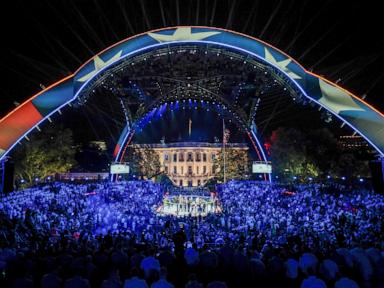
The headlines credited the FBI with saving thousands of lives on the South Lawn of the White House. They praised high-tech surveillance and federal coordination for stopping a multi-state drone and sniper attack before the first punch landed at UFC Freedom 250. But the real break in the case didn't come from an encrypted data intercept or a national security satellite. It came from a terrified mother in Danville, Ohio.
She noticed her 19-year-old son spending his graduation money on things that didn't make sense. She saw the tactical vests. She counted the boxes of ammunition piling up in her home. She listened to him talk about "recon" missions with strangers he met on TikTok and Signal. Instead of looking the other way or protecting him out of a sense of misguided family loyalty, she picked up her phone and called the local sheriff.
That single phone call on June 10, 2026, blew the lid off one of the most sophisticated domestic terror plots in years. Five men are now behind bars, facing serious conspiracy and attempted murder charges. But if you look closely at the court affidavits, the federal agencies weren't ahead of this threat. They were racing against a clock that a brave parent started for them.
The Devastating Blueprint for the South Lawn
Federal prosecutors painted a chilling picture of what was supposed to happen on June 14 during the historic outdoor fight card. The event marked a massive dual celebration for America’s 250th anniversary and President Donald Trump’s 80th birthday. High-level politicians, Cabinet members, business elites, and sports fans packed the temporary arena.
The plotters didn't just want to cause a disruption. They engineered a multi-phase slaughter designed to exploit human panic.
The first wave relied on small, commercial drones modified to carry unspecified explosive devices. The cell planned to launch these drones from predetermined positions north of the White House grounds, flying them directly over the packed arena crowd. The goal was to detonate them to trigger instant mass panic, forcing thousands of fleeing attendees to rush toward specific, narrow exit bottlenecks and security checkpoints.
That's where the second phase came in. Sniper teams were instructed to station themselves along those exact escape routes. According to FBI task force documents, the plotters specifically ordered their snipers to target wealthy individuals and high-profile politicians as they fled the drone blasts.
As crowds and law enforcement scrambled to react to the explosions and gunfire, a separate ground team intended to breach the weakened White House security perimeter. The ultimate goal of the group was to "jumpstart" a violent revolution by assassinating elected officials and striking a massive blow to the American government structure.
How a Local Disturbance Call Became a Federal Operation
The investigation didn't start with tactical teams breaching doors. It began with an emergency dispatch to a home in Knox County, Ohio. Deputies from the Knox County Sheriff’s Office and officers from the Danville Police Department responded to what was initially logged as a domestic disturbance.
Tycen Proper, a 19-year-old who had recently graduated from a high school landscape and management program, had completely changed his behavior. His parents told arriving officers that their son had spent roughly $3,000 of his graduation gift money on high-powered firearms, a shotgun, a rifle, ballistic plates, tactical plate carriers, and thousands of rounds of ammunition.
Proper had also just abruptly quit his job. He told his family he was preparing to travel to Fredericksburg, Virginia, to meet up with an online group for what he described as "recon" and "hit-and-run missions." His mother later told investigators she immediately understood "hit-and-run" to mean mass shootings.
Recognizing a severe and immediate mental health and security risk, local deputies took Proper into emergency medical custody due to explicit homicidal ideation. The family voluntarily turned over his weapons and tactical gear. By the next morning, June 11, local police realized the scope of Proper's plans extended far beyond Ohio and looped in the FBI’s Joint Terrorism Task Force.
When federal agents interviewed Proper at the medical facility and searched his phone, they found the digital architecture of the network. Proper was active in highly radicalized Signal chat groups. One central coordinate chat contained at least 19 individuals actively planning the logistics of the Washington, D.C., assault.
The Vanguard and the Illegal Alien Ringleader
Proper wasn't working alone in his bedroom. He was part of a decentralized, cross-country cell communicating under names like "Vanguard of the Old." The group operated with a rigid, military-style tier system that assigned specific tactical roles to its members.
The alleged ringleader and tactical planner used the encrypted handle "Shepherd." Federal documents revealed that "Shepherd" was actually 31-year-old Abraham Hermosillo Alvarez, a Mexican citizen who had overstayed his B2 visitor visa. The FBI tracked a TikTok account used to funnel users into the Signal chat back to Alvarez, who was arrested by federal agents in Omaha, Nebraska.
According to co-conspirator statements, Alvarez acted as the primary operational coordinator. He drew up the maps of Washington, D.C., outlined the drone launch zones, and dictated the exact makeup of the teams. His orders required five distinct teams of three people. Each team needed one drone operator, one sniper, and one "tier-one operator" serving as a lookout and support asset.
The network stretched across multiple states, demonstrating how quickly online radicalization can manifest into physical infrastructure.
- Daniel K. Eskridge (32, Missouri): Tasked with researching the logistics of obtaining the necessary funds to purchase drones and charges. He also pushed the group to target localized infrastructure like the power grid to complicate law enforcement responses.
- Michael Alan Thomas (32, California): Self-described as a planner and advisor to the cell. Investigators noted that Thomas openly pushed violent anti-government and anti-Semitic conspiracy theories, viewing the UFC attack as a way to forcibly overthrow the U.S. government.
- Bryan Omar Roa (24, California): Arrested alongside Thomas and charged with conspiracy to commit murder, serving as part of the execution arm of the West Coast contingent.
The sheer geographic separation of these men highlights the terrifying speed of modern extremist pipelines. They didn't grow up together, and they didn't meet at local meetings. They found each other through short-form video algorithms and transitioned to encrypted apps to build an assassination plot in mere weeks.
The Security Reality Behind the Fight
While the FBI scrambled to execute arrest warrants across four states, UFC President Dana White was managing a logistical nightmare behind the scenes. The production cost the UFC an estimated $60 million to build a temporary, stadium-grade venue on the South Lawn.
White later disclosed to media outlets that the drone plot wasn't the only threat federal authorities were actively monitoring during the week leading up to the fight. Security officials tracked multiple active feeds, providing regular updates to UFC leadership as fighters like Justin Gaethje and Ilia Topuria arrived in the capital.
The Secret Service, leading the security apparatus with support from the U.S. Park Police and the Metropolitan Police Department, threw up massive blockades, checkpoints, and road closures throughout downtown Washington. While Dana White insisted that the event venue was the safest place in America that Sunday night, he dropped a dose of reality after the show. The immense security friction, weather risks, and multi-layered threat variables mean the UFC will likely never host another card at the White House.
Spotting the Signs of Online Radicalization
The UFC Freedom 250 plot reminds us that domestic terror investigations usually don't begin with a brilliant piece of federal counterintelligence. They begin when someone close to a radicalized individual notices the sudden, dramatic shift in their everyday reality.
If you are worried that a family member or friend is sliding down a dangerous digital rabbit hole, look for specific, compounding indicators rather than isolated behaviors.
The Abrupt Ideological Shift
Pay close attention if someone suddenly drops long-term hobbies, friends, or career goals to focus entirely on an insular belief system. In Tycen Proper’s case, his mother noted he suddenly leaned heavily into an ultra-religious, anti-government ideology that mixed fringe conspiracy theories with extreme interpretations of faith. He began obsessing over grievances regarding government corruption, corporate data centers, and water supplies.
Tactical Stockpiling
Purchasing a firearm isn't a crime. Buying a shotgun, an assault rifle, thousands of rounds of ammunition, extra magazines, body armor plates, and tactical gear all at once using graduation money or savings is a massive red flag. This behavior is especially dangerous if the person has no history of hunting, competitive shooting, or military background.
Cryptic Language and Secrecy
Radicalized individuals often adopt a new vocabulary borrowed from military or extremist subcultures. Listen for sudden references to doing "missions," conducting "recons," or operational security protocols. If they become intensely defensive about their phone, suddenly shift all communications to encrypted platforms like Signal or Matrix, and explicitly state they are forbidden from talking about their online friends, the risk is real.
Steps to Take If You Suspect a Plot
If you find yourself in the position that Tycen Proper's mother faced, you cannot afford to wait and see if things get better. Taking immediate, structured action can save lives, including the life of the person you care about.
- Document the Evidence Safely: Do not try to interrogate the individual or confront them aggressively, as this can cause them to accelerate their timeline or hide their tracks. Write down specific things you have seen or overheard, including dates, specific weapons purchased, and any apps they are using.
- Contact Local Law Enforcement First: Do not worry about jumping straight to the FBI. Your local sheriff's office or police department can respond immediately to evaluate the situation, initiate emergency mental health interventions if homicidal ideation is present, and secure physical weapons.
- Utilize the FBI Tip Line: If you have direct evidence of a multi-state plot or coordinated online network, submit a detailed report directly through the official FBI online tip portal or call your local FBI field office. Provide concrete facts, usernames, and physical descriptions rather than vague suspicions.
The quick actions of one family in Ohio proved that communities remain the front line of public safety. Federal agencies have massive resources, but those resources are useless until someone has the courage to break the silence and make the hardest call a parent can make.
FBI Thwarted Attack Targeting UFC Freedom 250
This video provides an operational overview of how local law enforcement and federal agencies coordinated the arrests across multiple states just days before the event took place.