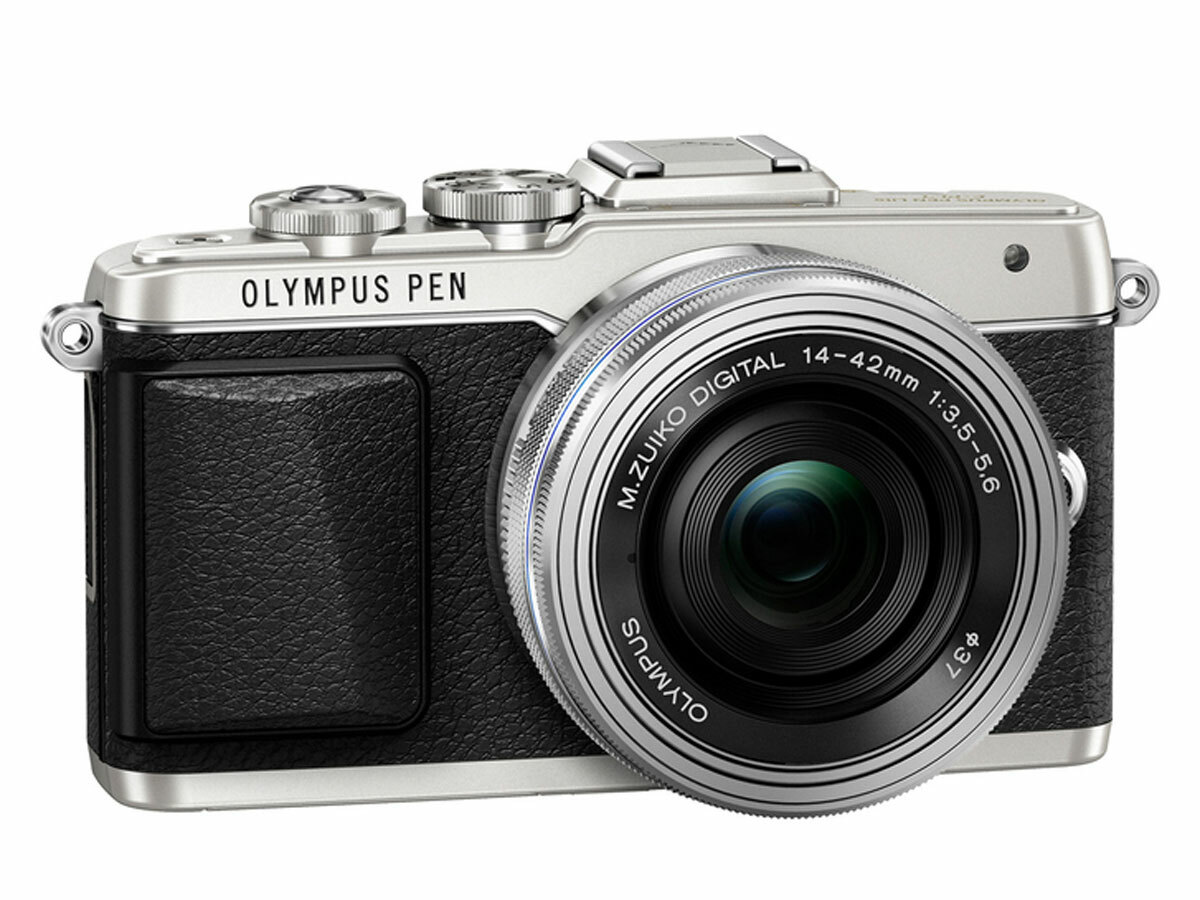
You don't need a massive rig to take photos that actually mean something. Most people think they've got "enough" camera in their pocket because modern smartphones use clever software to fake depth and color. They're wrong. If you've ever tried to capture a candid moment on a busy street only to realize your phone's shutter lag missed the shot, you know the frustration. The Olympus Camera Pen E PL7 was designed for the exact moment when phone quality fails and professional bulk becomes a burden. It's a tiny, metal-bodied powerhouse that treats photography like an art rather than a social media chore.
Why Micro Four Thirds Still Matters in 2026
The sensor size inside this specific model is the heart of the debate. It's smaller than a full-frame sensor but significantly larger than what's tucked inside a high-end mobile device. This matters for light gathering. When the sun starts to dip, your phone starts guessing. It smears pixels together to hide noise. This mirrorless system doesn't do that. It uses physical surface area to catch photons, giving you a texture and depth that software can't replicate.
The Physics of the Image
Lenses change everything. When you use the Micro Four Thirds mount, you're tapping into one of the most diverse lens ecosystems on the planet. You can slap a tiny 17mm pancake lens on the front and slip the whole setup into a jacket pocket. Try doing that with a DSLR. You're getting a 16-megapixel Live MOS sensor that, while sounding modest by modern "megapixel war" standards, delivers files with incredible dynamic range. You can pull detail out of shadows that would be pure black on a standard mobile snap.
Build Quality Over Plastic
Hold this device in your hand and you'll immediately feel the difference. It's heavy in a way that implies durability. The metal dials have a tactile click that reminds you you're operating a machine, not a toy. Olympus leaned hard into the "PEN" heritage here. They wanted something that looked like a vintage rangefinder but functioned with the speed of a modern digital interface. It feels like a piece of jewelry that just happens to take world-class photos.
Setting Up Your Olympus Camera Pen E PL7 for Success
Getting the most out of this gear requires moving past the "iAuto" mode. If you stay in automatic, you're letting the processor make all the creative choices. That's a waste of potential. You want to take control of the exposure triangle. Start by setting your top dial to Aperture Priority. This lets you decide how much of the background stays blurry while the camera handles the shutter speed. It's the "sweet spot" for street and lifestyle photography.
Mastering the Flip-Down Screen
One of the most distinct features here is the LCD that flips down 180 degrees. Most manufacturers flip their screens to the side or up. Olympus went down. At first, it feels weird. Then you realize why they did it. When you're taking a self-portrait or a high-angle shot, your eyes stay more naturally aligned with the lens axis. It also makes shooting from the hip much easier. You can look down at the screen while the camera sits at waist level, allowing you to take candid shots without people realizing they're being photographed.
Customizing the Fn Buttons
The secret to speed is the Function button. I always map mine to Focus Peaking. Since this system is so popular for adapting old manual lenses from the 70s and 80s, you need a way to see what's in focus. Focus Peaking highlights the sharp edges in your frame with a bright color. It turns manual focusing from a guessing game into a precision tool. You can find more technical details on lens compatibility through the official OM System support site.
The In-Body Image Stabilization Advantage
Most cameras in this size bracket rely on the lens to stabilize the image. Olympus put the stabilization inside the body itself. It's a 3-axis VCM system. This means every single lens you attach—even a 50-year-old Nikon lens with a cheap adapter—becomes stabilized.
Shooting in Low Light
I've taken handheld shots at half a second exposure time that came out sharp. That's nearly impossible with most other brands without a tripod. For a street photographer, this is a massive win. You can keep your ISO low to avoid grain and just let the sensor shift slightly to compensate for your shaky hands. It makes the tripod obsolete for 90% of daily shooting scenarios.
Video Capabilities and Limits
Let's be real: this isn't a 4K cinema camera. It shoots 1080p video at 30 frames per second. If you're a high-end videographer, you'll find that limiting. But for quick clips, VLOGs, or capturing family memories, the stabilization makes the footage look incredibly smooth. It has a "movie effect" feature that lets you add fades and transitions in-camera, which was pretty forward-thinking for its release era.
Comparing the PEN Series to Modern Alternatives
You might wonder if you should just buy a newer model or a different brand like Fujifilm. The "Retro" look is popular right now, and prices for used gear are climbing. However, the Olympus Camera Pen E PL7 holds a specific niche because it's thinner than the newer E-PL9 or E-PL10. It lacks the built-in flash of the later models, but that's actually a benefit for the form factor. It stays sleek.
Lens Choices That Make Sense
Don't stick with the kit lens forever. The 14-42mm "pancake" zoom that often comes with the body is fine, but it's slow. If you want that "pro" look, you need a prime lens.
- The 25mm f/1.8: This is the "nifty fifty" equivalent. It sees the world much like the human eye does. It's perfect for portraits.
- The 45mm f/1.8: This is arguably one of the best value lenses ever made. It creates creamy background blur that makes your subjects pop.
- The 9mm Fisheye Body Cap Lens: It's cheap, plastic, and hilarious. It turns your camera into a wide-angle fun machine that fits in a coin pocket.
The Wi-Fi and App Integration
Even though this model has been out for years, the Olympus Image Share app still works remarkably well. You can pair your phone via a QR code displayed on the camera's screen. From there, you can use your phone as a remote shutter or pull photos off the SD card to edit in Lightroom Mobile. It bridges the gap between "real camera quality" and "instant social sharing" without needing a laptop.
Common Mistakes and How to Avoid Them
I see people complain about the autofocus speed on older mirrorless bodies. Usually, it's because they're using the wrong settings. This system uses contrast-detection autofocus. It's fast, but it struggles if you try to focus on a flat, featureless wall. You need to find an edge with some contrast.
Don't Over-ISO
While the sensor is good, it's not a night-vision goggles. If you push the ISO past 3200, you're going to see some "digital snow." I recommend capping the Auto-ISO at 1600. If it's darker than that, use the stabilization to your advantage and slow down your shutter speed instead.
The Battery Life Reality
Small cameras have small batteries. The BLS-50 battery is compact, but it won't last a whole weekend of heavy shooting. If you're going out for a full day in a city like New York or Tokyo, carry a spare. They're cheap and small enough to fit in the little pocket of your jeans. Don't let a dead battery kill your motivation halfway through a trip.
The Aesthetic Appeal of the PEN Interface
The menu system in these cameras is notorious for being "deep." Some call it messy. I call it thorough. You can change almost everything. You can change the direction the dials turn. You can change how long the playback stays on the screen. You can even fine-tune the colors of the "Art Filters."
Art Filters Done Right
Most "filters" on cameras are tacky. They look like 2012 Instagram. But the Grainy Film and Dramatic Tone filters on this device are actually usable. The Grainy Film mode produces a high-contrast black and white look that mimics Kodak Tri-X film. It's gritty. It has soul. When I'm uninspired, I switch to that mode and suddenly everything looks like a classic street photograph.
Why Enthusiasts Keep Coming Back
There's a community of "PEN" users who refuse to upgrade. They love the specific way the sensor renders colors—often called "Olympus Colors." The reds and blues have a certain punchiness that feels lifelike without being oversaturated. You can find deep-dive discussions on these color profiles and firmware updates on sites like DPReview or specialized photography forums.
Practical Steps to Start Your Photography Journey
If you've just picked up one of these units, or you're hunting for one on the used market, don't just stare at the specs. You need to get out and use it. A camera is a tool for seeing, and this specific tool is designed to be invisible until you need it.
- Check the Shutter Count: If you're buying used, hold down the MENU button while turning the camera on. There's a secret menu sequence that shows you how many times the shutter has fired. Anything under 20,000 is basically new. These shutters are usually rated for 100,000 clicks.
- Update the Firmware: Olympus released several updates that improved autofocus speed and lens compatibility. Use a standard USB cable and the OM Workspace software on your computer to make sure you're running the latest version.
- Turn Off the Beeps: Nothing ruins a candid moment like a loud "BEEP-BEEP" when the camera locks focus. Dive into the Cog Menu (Custom Menu) and silence the confirmation sounds.
- Shoot RAW + JPEG: The JPEGs out of this camera are great, but the RAW files give you the "safety net" to fix exposure mistakes later. With modern AI denoise tools, those old RAW files look better now than they did when the camera first launched.
- Get a Wrist Strap: Ditch the bulky neck strap that comes in the box. A simple leather wrist strap makes the camera feel like an extension of your arm. It encourages you to keep the camera in your hand rather than tucked away in a bag.
People often ask if a 16-megapixel camera from years ago is "obsolete." Look at a printed 11x14 photo from this sensor and compare it to a phone crop. The difference in the transition between light and shadow is obvious. The way the lens renders out-of-focus areas (bokeh) looks natural, not like a blurry digital mask.
The gear you use should inspire you to look at the world differently. This camera does that by being small enough to always have with you, but powerful enough to handle serious creative work. It doesn't demand you be a professional, but it gives you the tools to shoot like one. Go find some interesting light and see what happens. The street is waiting.