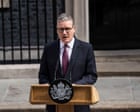
Keir Starmer is out. The man who led the Labour Party to a massive landslide victory less than two years ago stood outside 10 Downing Street on Monday morning and threw in the towel. It is an extraordinary, rapid fall from grace for a prime minister who once looked utterly unassailable.
The immediate trigger was a weekend of intense mutiny from his own cabinet, following the arrival of a dangerous internal rival back in Westminster. But the rot started long before this weekend. Starmer failed to fix public services, presided over a flatlining economy, and alienated voters with a series of staggering unforced errors.
If you want to understand how a historic majority dissolved into a tearful resignation speech in less than twenty-four months, you have to look at the cold electoral panic that gripped the Labour Party.
The Makerfield Trigger and the Return of the King Over the Water
British politics moves fast, but the last few days have been dizzying. The match that lit the final fuse was a by-election last week in Makerfield, a working-class seat in the North West of England. Labour strategists were terrified they would lose the seat to Nigel Farage's Reform UK, a right-wing party that has been surging in the polls.
Instead, former Manchester Mayor Andy Burnham stepped up, ran a fiercely independent campaign, and won a decisive victory.
Burnham is now an MP. He is back in the House of Commons, and his victory immediately handed him a fresh mandate as the man who knows how to beat back the populist right. For months, Labour MPs worried that Starmer's wooden communication style would lead them to slaughter at the next general election. Burnham offered an alternative: an older, institutional brand of working-class populism built over decades.
Over the weekend, Starmer retreated to Chequers, the prime minister's country estate, insisting he would stand and fight any leadership challenge. He told the media on Friday that he was not going to walk away.
By Saturday night, the math changed. More than half a dozen cabinet ministers privately told Starmer his time was up. His inner circle began drafting a resignation speech. On Monday morning, Starmer admitted defeat. He stood at the podium and acknowledged that his parliamentary party no longer believed he was the person to lead them forward.
The Local Election Disaster That Broke the Floor
To understand why Labour MPs turned on their leader so quickly, look at the local election results from May. It was a complete bloodbath.
Labour suffered a historic defeat in Wales. The party lost significant numbers of council seats across England to a surging Reform UK on the right and a growing Green Party on the left. Rank-and-file MPs returned to Westminster shocked by the deep unpopularity they encountered on the doorstep. Voters were not just indifferent; they were furious.
Starmer tried to reset. He delivered a high-stakes speech with his shirt sleeves rolled up, declaring that he would prove his doubters wrong. The reaction from his own backbenchers was brutal. One MP told reporters the performance simply made them feel sorry for the prime minister. Another described it with a single word: "Meh."
When a prime minister loses the fear of his enemies and the respect of his friends, his days are numbered. The trickle of voices calling for an exit date quickly became a steady stream. Health Secretary Wes Streeting even attempted to lay the groundwork for a leadership challenge days after the local election defeat, though he ultimately failed to gather the necessary numbers. The message, however, was clear. The party wanted a change at the top.
Three Disastrous Decisions That Destroyed Starmer's Authority
Starmer did not just suffer from bad luck. He made specific, catastrophic errors in judgment that wrecked his credibility with both his party and the public.
The Peter Mandelson Appointment
Starmer chose to appoint Peter Mandelson, a veteran Labour power broker, as the UK ambassador to the United States. It was a shocking piece of tone-deaf politics. Mandelson carries immense political baggage, specifically his historical entanglement with the deceased financier Jeffrey Epstein. The recent publication of additional files detailing those connections dragged the scandal back into the headlines, making Starmer's appointment look completely indefensible. It alienated the left of his party and disgusted ordinary voters.
The Iran War Split with Donald Trump
Foreign policy quickly turned into a trap. Starmer desperately wanted to avoid the fate of Tony Blair, whose legacy was permanently stained by the 2003 invasion of Iraq. When tensions erupted into war involving Iran, Starmer refused to allow US forces to stage military attacks from British bases.
This decision infuriated US President Donald Trump. The initially polite relationship between London and Washington shattered completely. Trump publicly mocked Starmer on social media, declaring that the British leader had failed badly on immigration and energy policy, while openly anticipating his resignation. Starmer found himself caught in the worst of all worlds: he looked weak to his international allies and ineffective to his domestic critics.
Failure on Core Pledges
Closer to home, Starmer simply failed to deliver on the bread-and-butter issues that won him the 2024 election. He promised to jump-start economic growth, rescue a collapsing National Health Service, and ease a brutal cost-of-living crisis. Instead, the economy stagnated. Waiting lists stayed stubbornly high. His willingness to reverse previous policy commitments under pressure made him look weak and vacillating to the parliamentary Labour Party.
What Happens Right Now
The United Kingdom is now looking at its seventh prime minister in ten years. This level of political volatility was supposed to end when the Conservatives were kicked out in 2024, but the institutional instability of British politics runs deeper than any single party.
Starmer announced that nominations for the next Labour leader will open on July 9. He intends to remain as a caretaker prime minister through the summer recess, with the goal of having a new leader in Downing Street by the time Parliament returns on September 1.
Andy Burnham is the clear frontrunner. If the party decides to avoid a bruising, multi-candidate battle and unites behind him, Burnham could be sworn in as prime minister within weeks. However, a coronation carries risks. A formal leadership race would force the party to openly debate its direction, particularly on how to handle the twin threats of Nigel Farage's Reform UK and Donald Trump's hostile administration across the Atlantic.
If you are tracking this political crisis, watch these next steps:
- Monitor the nomination process on July 9 to see if any centrist figures from the Blairite wing of the party, such as Wes Streeting, attempt to challenge Burnham's working-class populist platform.
- Watch the economic indicators and poll numbers over July to see if Reform UK continues to capitalize on Labour's leadership vacuum.
- Follow the official transition schedule to see if Starmer can maintain control of his caretaker cabinet until September, or if the pressure forces an accelerated exit by mid-July.