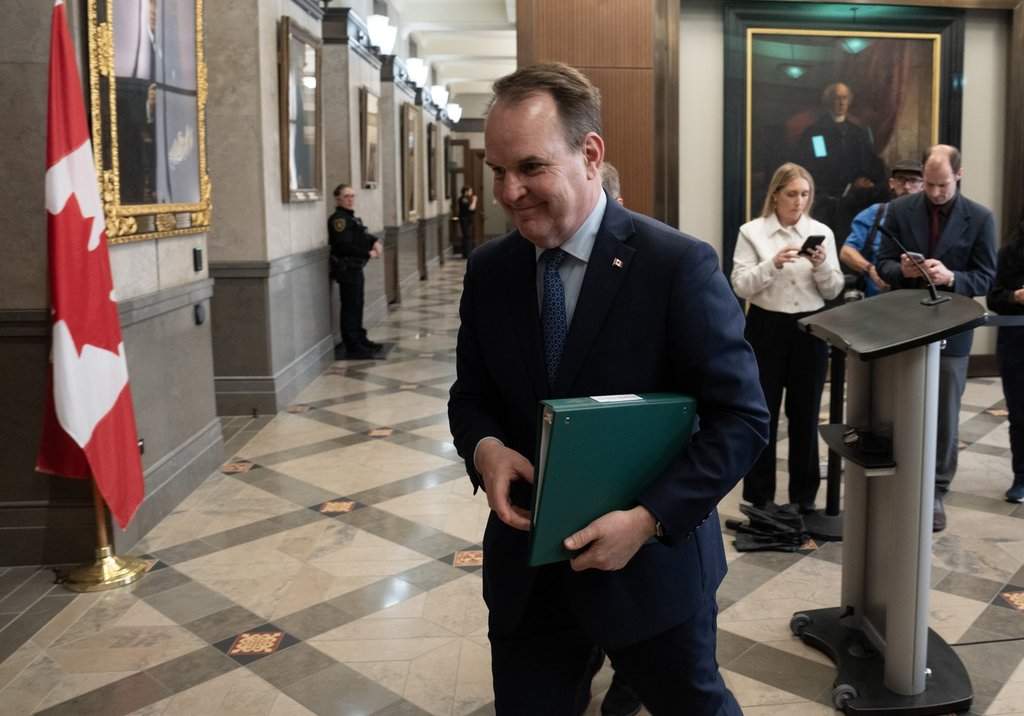
Canada has spent decades talking about bullet trains while watching the rest of the world zoom past on tracks built for the twenty-first century. For years, the federal government drifted from one half-measure to another. Then came Alto, the Crown corporation tasked with pulling off a massive, $60-billion to $90-billion dedicated track system between Toronto and Quebec City. But the initial map left a gaping hole along the shores of Lake Ontario, skipping over one of eastern Ontario’s most crucial hubs. That just changed. Transport Minister Steven MacKinnon ordered Alto to officially study a high-speed rail Kingston stop, throwing a massive curveball into an already complex mega-project.
This pivot didn't happen in a vacuum. It comes directly out of Alto’s newly released "What We Heard" report, which compiled months of intense public consultations. For a project that has drawn heavy fire from rural communities, adding Kingston is a calculated political and economic play. It shifts the conversation entirely. If you live anywhere between Toronto and Ottawa, this route modification changes how you'll move, where you might live, and whether this multi-billion-dollar gamble will actually succeed.
The unexpected shift to a southern corridor option
The original plan for Alto was heavily criticized for focusing too much on an inland northern route through Peterborough before cutting over to Ottawa. That track layout relied on older, abandoned rail right-of-ways that seemed convenient on paper. However, critics quickly pointed out that those paths are too winding for trains meant to fly past 300 km/h. Forging entirely new tracks through the dense rock of the Canadian Shield is a engineering nightmare that would drain the budget rapidly.
By directing Alto to assess a southern route option that loops down toward Kingston, the government is trying to hit the reset button on its planning phase. The plan would connect the new high-speed line directly with the existing Via Rail station in Kingston.
Look at what this means for travel times. Right now, taking a regular train from Kingston to Toronto takes roughly two and a half hours on a good day, often plagued by freight train delays. Alto estimates the high-speed line will slice that down to about 90 minutes. Cut it in half. That turns a major multi-hour journey into a fast commute.
Furthermore, it changes the math for the entire surrounding region. According to Alto’s data, putting a station in Kingston places roughly 80% of the population living between Peterborough and Ottawa within a 25-minute drive of a high-speed terminal. Instead of forcing regional travelers to go deep into the northern wilderness or drive all the way to a major metropolis, a lakeside hub aggregates passengers efficiently.
Why skipping Kingston was a mistake from day one
Building high-speed rail isn't just about linking two massive anchor cities like Toronto and Montreal. It is about capturing mid-sized growth markets that feed the system. Leaving Kingston off the original list of seven mandated stops (Toronto, Peterborough, Ottawa, Laval, Montreal, Trois-Rivières, and Quebec City) always looked bizarre to regional transportation analysts.
Kingston is not just a quiet town on the water. It is a major educational and institutional center. Between Queen's University, the Royal Military College, and St. Lawrence College, the city shuffles tens of thousands of students, researchers, and professionals back and forth across Ontario every single month. These are the exact demographics that ditch cars in favor of rapid transit. They want to work on a laptop with reliable Wi-Fi, not sit in gridlock on Highway 401.
Via Rail already knows this. Kingston has historically been one of the busiest intermediate stations on the entire Windsor-Quebec corridor. Building a shiny new rail network that bypasses an already proven pool of daily riders to chase a brand-new market in less populated areas was an massive gamble. Local municipal leaders, led by the mayors of Kingston and South Frontenac, spent months hammering this point home to federal officials. They argued that the project shouldn't hide in the woods. It belongs where the people are.
Balancing the budget against passenger revenue projections
Every major rail project on earth faces the same twin demons: ballooning construction costs and over-optimistic ridership estimates. Alto is already staring down an eye-watering price tag of $60 billion to $90 billion. Adding an eighth stop in Kingston introduces real friction to those equations.
Every station you add slows down the overall trip. High-speed trains take time to accelerate up to 300 km/h and just as much room to safely slow down. If a train stops too frequently, it stops being a high-speed service and turns into an expensive commuter train. Alto will have to carefully engineer its schedule, likely mixing express trains that skip smaller hubs with regional trains that make the full run.
Then there is the track layout itself. Bringing a 300 km/h line down to meet the current Via Rail station near Highway 401 requires navigating built-up urban zones and existing rights-of-way. It is vastly more expensive than laying straight track through open fields. Expropriating land in or near an established city costs a premium.
But the flip side is the revenue. A high-speed line that serves Kingston taps into an immediate, high-yield passenger market. Alto claims the broader network will eventually generate $24 billion annually in economic activity, bumping Canada's GDP by a permanent 1.1%. To get close to those numbers, the trains need to run full. Kingston helps ensure they will.
The deep rural-urban divide over the tracks
While urbanites and university students cheer the prospect of rapid travel, the mood in the countryside is intensely hostile. Minister MacKinnon's announcement in Kingston didn't just draw local politicians; it drew angry protests from farmers and rural landowners. This resistance is a major hurdle that could stall construction for years.
The reality of high-speed rail is that it is exclusive. Unlike a regular road or an open field, a 300 km/h electric rail line requires heavy security fencing and absolute isolation from surrounding property. It acts like a giant concrete knife cutting through the countryside.
For an agricultural producer, this is disastrous. If a high-speed line slices directly through your farm, you cannot just drive your tractor across the tracks to tend to your crops on the other side. You might have to drive miles out of your way to find an overpass. It separates cohesive farmlands, disrupts local drainage systems, and limits road access for rural communities that are already isolated.
There is also the bitter memory of Mirabel, Quebec. Decades ago, the federal government expropriated massive tracts of farmland for an airport project that never lived up to its promises, leaving deep scars in the community. Rural groups in eastern Ontario and Quebec see Alto as history repeating itself. They feel they are being forced to sacrifice their livelihoods and land so that corporate professionals in Toronto can get to an Ottawa meeting an hour faster.
What happens next as the 2029 construction deadline looms
This directive to Alto doesn't mean the bulldozers are turning south tomorrow. It means the engineering teams have to go back to their digital maps and run the numbers again. They have a narrow window to prove whether a high-speed rail Kingston stop can work without wrecking the project's timeline.
The federal government wants the first phase of construction to begin by 2029 or 2030. That initial leg will connect Montreal and Ottawa, serving as a massive operational test case for the rest of the line. Because that segment is further east, it gives planners a little breathing room to figure out the trickier Ontario routing.
Over the coming months, Alto will perform detailed technical feasibility assessments. They need to figure out exactly how to bring a high-speed corridor down to Lake Ontario without blowing past the $90-billion budget cap. They will look at whether they can run the line directly along the Highway 401 corridor, which municipal leaders prefer because the land is already heavily used for transit, minimizing fresh damage to pristine farms.
If you are a property owner anywhere along the potential southern route between Peterborough, Ottawa, and Kingston, you need to stay active. Watch the public registries for upcoming geographical survey notices. Local advocacy groups are already organizing to ensure that if the line moves south, mitigation measures like wildlife corridors, underpasses for agricultural machinery, and fair compensation frameworks are locked into the contract before a single spike is driven. The fight over Canada's transit future is no longer just about if we can build it, but exactly whose backyard it will run through.
For a deeper look into how this project is creating tension between different parts of the province, check out The rural-urban divide over high-speed rail. This video provides excellent on-the-ground context regarding the exact complaints from farmers and rural landowners who find themselves directly in the path of the proposed rail line.