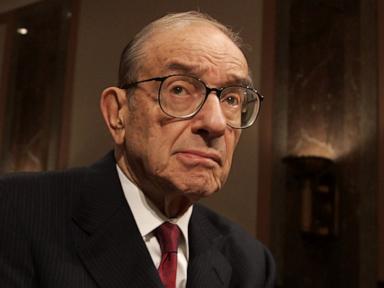
Alan Greenspan is dead at 100. The legendary former Federal Reserve chairman passed away on June 22, 2026, from complications of Parkinson's disease. His wife, NBC News correspondent Andrea Mitchell, confirmed his passing at their home.
With his departure, an entire epoch of economic history draws to a close. For nearly two decades, this man controlled the financial pulse of the planet. Presidents came and went, but Greenspan remained the undisputed captain of the American economy. If you have a mortgage, a retirement account, or a job, your daily financial reality was shaped by his choices.
Most people remember him either as the genius who engineered the longest economic expansion in American history or as the deregulatory zealot who set the stage for the 2008 global financial meltdown. The truth is far more complicated. He was a jazz saxophonist turned economic oracle who spent his life trying to balance rigid free-market theory with the chaotic messiness of human behavior.
From the Jazz Club to the Halls of Power
Long before he was adjusting interest rates, Greenspan was playing the clarinet and saxophone. Born in New York City in 1926, he attended the Juilliard School and toured with a swing band alongside jazz legend Stan Getz. He kept the band's books, discovering he had a much better head for numbers than for music. He traded his saxophone for economics textbooks, earning his degrees from New York University.
During the 1950s, Greenspan fell into the intellectual orbit of Ayn Rand, the famous author of Atlas Shrugged and champion of radical self-interest. He became part of her inner circle. This relationship was not just a passing phase. It formed his foundational belief system. He genuinely believed that unfettered markets were inherently self-correcting. He believed that the government should stay out of the way.
He built a highly successful economic consulting firm, Townsend-Greenspan & Co., which he ran for decades. Politicians quickly noticed his freakish ability to memorize vast spreadsheets of industrial data. President Gerald Ford tapped him to lead the Council of Economic Advisers in 1974. By 1987, Ronald Reagan appointed him to replace Paul Volcker as chairman of the Federal Reserve.
The Birth of the Maestro
Greenspan had barely settled into his new office at the Fed when disaster struck. On October 19, 1987, known as Black Monday, the Dow Jones Industrial Average plummeted 22.6% in a single day. It remains the largest one-day percentage drop in stock market history. Wall Street panicked.
The new chairman did not flinch. He immediately issued a short, punchy statement declaring that the Fed stood ready to provide liquidity to support the economic system. He flooded the banking system with cash. The panic subsided. The economy kept growing.
That decisive action cemented his reputation. He spent the next decade presiding over a breathtaking boom. Throughout the 1990s, productivity soared, unemployment fell to historic lows, and inflation stayed quiet. Wall Street began to view him as an infallible wizard. Magazine covers labeled him the "Maestro" and the "Oracle."
Investors tried everything to guess his next move. Wall Street reporters created the "Briefcase Indicator." If Greenspan arrived at a policy meeting carrying a thick, bulging briefcase, traders assumed interest rates were changing because he brought extra data to convince his colleagues. If it was thin, they assumed no changes were coming.
The Art of Speaking Without Saying Anything
As his power grew, Greenspan realized his words could move trillions of dollars in seconds. To prevent market whiplash, he perfected a cryptic style of speaking that economists called "Fed-speak." He used long, winding sentences filled with double negatives and dense jargon to obscure his actual thoughts.
He joked about this habit during a congressional hearing. He famously told lawmakers that if he happened to seem clear to them, they must have misunderstood what he said.
Only once did he speak too clearly, and it shook global markets. In December 1996, during a routine dinner speech, he wondered out loud whether "irrational exuberance" had escalated asset values too quickly. Stock markets from Tokyo to New York crashed the very next morning. Investors learned the hard way that a single whisper from Greenspan could wipe out fortunes.
The Greenspan Put and the Subprime Trap
The dot-com bubble burst in 2000, and the terrorist attacks of September 11, 2001, rocked the nation. Greenspan responded by slashing interest rates to historic lows. He kept them there for an extended period.
This decision changed the psychology of Wall Street. Traders realized that whenever the market started to tank, Greenspan would cut rates to rescue them. Investors called this safety net the "Greenspan Put." It encouraged massive risk-taking because Wall Street assumed the Fed would always catch them if they fell.
Cheap money flooded the American financial system. Because bonds offered terrible yields due to low interest rates, investors chased higher returns elsewhere. They found them in the housing market. Wall Street investment banks began buying up millions of subprime mortgages, repackaging them into incredibly complex financial products, and selling them to global investors.
Politicians and consumer advocates warned Greenspan that predatory lending was spiraling out of control. He refused to step in. He argued that lenders knew what they were doing and would never intentionally destroy their own businesses. He believed private regulation was always superior to government oversight.
The Confession That Changed His Legacy
Greenspan stepped down from the Fed in early 2006, right at the peak of the housing bubble. He left office to a chorus of praise, receiving the Presidential Medal of Freedom. His successor, Ben Bernanke, inherited a ticking time bomb.
Within two years, the housing market collapsed. The complex mortgage securities turned out to be toxic. Major investment banks folded overnight, credit markets froze, and the U.S. plunged into the deepest economic downturn since the Great Depression.
In October 2008, Greenspan was called to testify before a hostile congressional committee. The exchange was brutal. Congressman Henry Waxman pushed him to admit his philosophy had failed.
Greenspan did something central bankers almost never do. He admitted he was wrong. He stated he found a flaw in his ideology. He confessed that his model of how the world worked had failed to anticipate the sheer greed and recklessness that brought down the financial system. It was an astonishing moment of intellectual honesty, but it forever tarnished his historical legacy.
How to Protect Your Wealth in a Post-Greenspan World
The modern financial system still operates under the shadow of Greenspan's choices. Central banks still use his playbook of flooding the market with money during crises. You cannot afford to ignore these realities when managing your own cash.
First, ignore the financial noise and look at real liquidity. Central bankers talk a big game about economic health, but their primary tool is printing money. When interest rates drop, bubbles grow. Do not get caught buying into a market at its absolute peak just because money feels cheap today.
Second, never assume an investment is safe just because big institutions are backing it. Greenspan’s greatest mistake was trusting that big banks would naturally manage their own risks. They didn't then, and they won't now. Always check the underlying debt levels of companies you invest in. If an investment seems too complicated to explain to a friend, walk away.
Third, build your own financial floor. Do not rely on government interventions or central bank rescues to save your portfolio. Keep enough liquid cash in high-yield accounts to survive a multi-year downturn. Market cycles are brutal, and the safety nets Wall Street relies on will not save average retail investors when panic hits the fan. Keep your portfolio simple, stay diversified across asset classes, and reduce your personal debt immediately.