Bulldozers are moving through the streets of El Alto right now. After six weeks of absolute paralysis, empty grocery shelves, and fuel lines that wrapped around city blocks, the Bolivian government finally lost its patience.
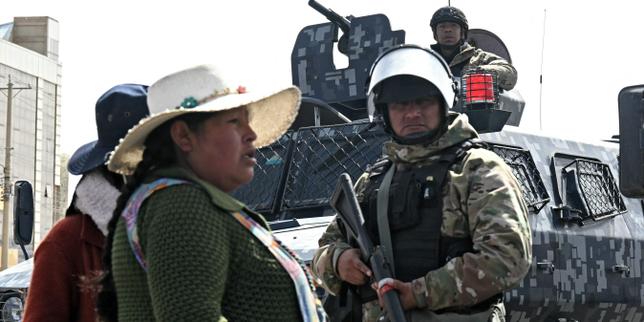
President Rodrigo Paz just signed a 90-day national state of exception. That is a fancy legal term for a military-backed emergency lockdown. Within hours of his predawn televised speech, joint convoys of armed police and soldiers rolled into major choke points. They aren't asking nicely anymore. Dirt mounds, piles of jagged rocks, and burning tires that cut off the capital city of La Paz are being scraped away by heavy machinery.
If you think this is just another temporary Latin American protest, you are missing the bigger picture. This is the most dangerous economic and political flashpoint in the Andes right now. It is a direct clash between a new center-right government trying to undo twenty years of socialist economic policies and a deeply entrenched opposition that refuses to back down.
The Thirty Day Meltdown That Broke the Country
To understand why the military is currently clearing roads, you have to look at how unlivable daily life became over the last two months. This isn't about people marching with signs. It is about a coordinated, nationwide economic strangulation strategy.
Since early May, the country has been tied up in knots. The main labor union, the Central Obrera Boliviana (COB), launched a wave of protests that quickly spun out of control. Miners, factory workers, and indigenous farming groups blocked the primary highways connecting the agricultural lowlands to the high-altitude cities.
The results were immediate and devastating.
- La Paz ran out of fresh meat and poultry within a week.
- Hospitals began running dangerously low on oxygen and basic medical supplies.
- Diesel shortages stopped transit buses and stranded thousands of commercial trucks on dirt shoulders.
According to the country's ombudsman, at least fourteen people died in clashes between May 1 and mid-June. The economic damage is already tracking into billions of dollars. For a nation already suffering from its worst economic crisis in four decades, it was a self-inflicted wound the country simply couldn't survive.
The Mirage of the Friday Night Deal
The government thought they bought their way out of this on Friday night. After grueling hours of negotiations, the administration signed a sweeping pact with Mario Argollo, the head of the COB union.
The terms seemed like a massive win for the protesters. The government explicitly promised that it would not privatize major state-owned enterprises, which was the biggest fear driving the labor unions into the streets. Argollo walked out of the meeting room and declared to reporters that all national pressure tactics were officially over.
But agreements signed in air-conditioned rooms in La Paz don't always mean much on the ground.
The moment the deal was announced, a massive rift opened in the protest movement. Rural peasant factions and indigenous groups immediately felt burned. They didn't see a compromise; they saw a corporate sellout.
The Shadow of Evo Morales in the Chapare
This is where the real political drama hides. The union leadership might have agreed to go home, but the coca growers in the Chapare region are doubling down.
The Chapare is the absolute geopolitical stronghold of former president Evo Morales. He ruled Bolivia from 2006 to 2019, and his political ghost still haunts every major decision made in the country. He has spent the last two years operating deeply in the shadows, dodging various legal fights and living in political hiding. Yet his influence over the rural base remains ironclad.
Antonio Mallku, a prominent regional peasant leader, went on television shortly after the union deal was signed to declare open defiance. He stated directly that rural indigenous communities felt betrayed by the central union leadership. His faction didn't look at the clearing of roads as peace; they looked at it as wartime. They openly vowed to harden the blockades in the interior of the country.
The administration knows exactly where the orders are coming from. President Paz didn't mince words during his morning address. He openly labeled the ongoing resistance as a coup attempt funded and directed by what he called narcoterrorism. It is an open secret that the government views the continuing blockades as a direct attempt by Morales loyalists to force the current administration out of office.
When reporters asked Interior Minister Marco Antonio Oviedo if the military would push directly into the hostile Chapare territory to clear the roads, his response was short and chilling. He said that if they have to go in, they will go in.
Forty Years of Structural Decay
It is easy to blame this entire mess on political tribalism, but the real rot is economic. Bolivia is fundamentally out of money.
For nearly two decades, the country lived high on the hog by exporting massive amounts of natural gas to neighboring Brazil and Argentina. That revenue engine funded huge social programs and kept the local currency artificially pegged to the US dollar. It felt like an economic miracle, but it relied on a finite resource.
The gas fields started drying up years ago due to a total lack of new investment. Production plummeted. Almost overnight, Bolivia went from a major energy exporter to a country that has to spend its precious cash reserves to import expensive foreign diesel and gasoline.
The piggy bank is empty. Foreign currency reserves have crashed to near zero. Because businesses cannot get their hands on US dollars to pay for imports, everything from car parts to basic electronics has skyrocketed in price. The black-market rate for dollars is soaring, and the official inflation rate has hit heights not seen since the hyperinflation chaos of the 1980s.
President Paz took office only seven months ago, in November. He is the first conservative, non-socialist leader to run the country in twenty years. He inherited an absolute fiscal nightmare. His attempts to reform the economy, slash state spending, and stabilize the currency are hitting a wall of resistance from populations that grew accustomed to heavily subsidized living standards.
The Washington Connection
This domestic crisis is quickly turning into an international chess game. The United States has made it clear which side it is backing.
Earlier this month, US Secretary of State Marco Rubio held a direct strategy call with President Paz. The State Department later released a statement explicitly backing the current administration. They described it as an unwavering commitment to protect democracy while Paz attempts to rebuild a broken nation after two decades of failed socialist management.
Washington isn't just sending nice words. The US is actively ramping up logistics operations and emergency financial assistance to bypass the illegal roadblocks. They are treating this as a critical geopolitical battle to prevent a conservative ally from being toppled by a left-wing populist uprising.
What Happens to the Country Now
The state of exception is slated to last for 90 days. It gives the military sweeping authority to assist the national police, restrict public gatherings, and arrest anyone attempting to block commercial transit routes.
For the average citizen in La Paz or Santa Cruz, the immediate reaction is pure relief. Store owners are finally seeing food trucks arrive. Families are finally able to buy flour, meat, and cooking gas without paying extortionate black-market premiums. People are genuinely exhausted after fifty days of constant anxiety.
But clearing a highway with a bulldozer doesn't fix a bankrupt central bank. It doesn't find new natural gas reserves. And it certainly doesn't bridge the deep ethnic and regional divides between the conservative urban middle class and the rural indigenous base that fiercely protects the legacy of the previous socialist era.
The roads are opening up for now because the state is using raw physical force. But as long as the structural economic crisis remains unresolved, the underlying pressure will keep building under the surface.
Actionable Steps for Navigating the Current Crisis
If you are currently managing business operations, supply chains, or travel logistics connected to the Andean region, you need to adapt immediately to this new legal environment.
Audit Supply Routes Through the Interior
Do not assume that an open road today means a safe route tomorrow. While major arteries like the highway between El Alto and La Paz are clear, rural bypasses through Cochabamba and the Chapare remain highly volatile. Reroute critical freight through southern corridors bordering Chile or Argentina where local indigenous syndicates have less leverage.
Establish Alternative Foreign Exchange Access
The dollar shortage will likely worsen as the government diverts remaining cash reserves toward emergency security operations and food stabilization. If you rely on importing goods into Bolivia, transition your payment structures to regional currencies or secure offshore banking arrangements. Relying on local Bolivian banks to clear dollar invoices is currently a recipe for indefinite delays.
Monitor Regional Security Decrees Daily
Under the 90-day state of exception, local military commanders have the authority to implement sudden night curfews and restrict vehicular movement without warning. Ensure all field staff and transport drivers carry official corporate identification and transit manifests that explicitly state they are carrying essential goods like food or medical supplies. This documentation is now required to clear military checkpoints.