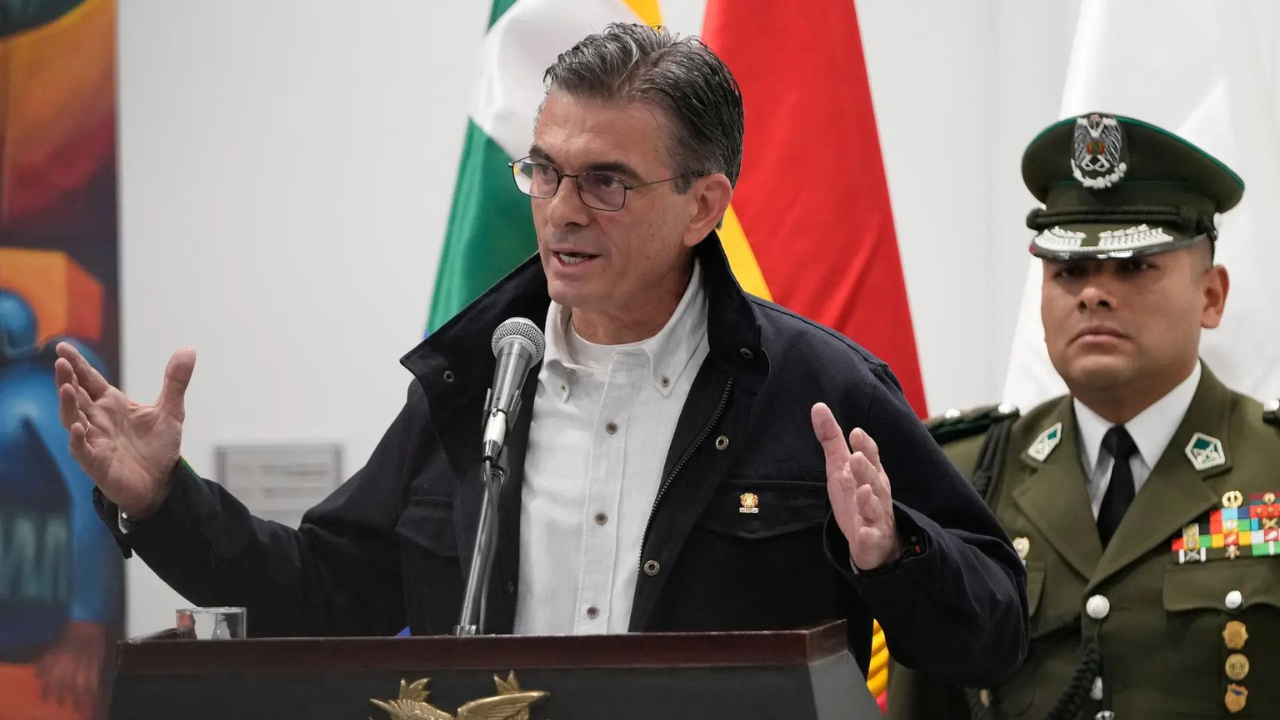
Bolivia is running out of options. President Rodrigo Paz just declared a nationwide state of emergency. This radical choice follows 50 days of relentless, grinding protests that have completely paralyzed the South American nation. If you think this is just another routine political dispute in Latin America, you're missing the bigger picture. The reality is much uglier.
Empty supermarket shelves are now a common sight in La Paz. Gas stations have miles-long lines of desperate drivers. Pharmacies have ran out of basic medicine. The country is essentially a hostage to its own geography. Protesters have choked off the primary highways. They've built dirt walls and piled rocks across vital shipping corridors.
The Boiling Point
What brought Bolivia to this edge? The immediate trigger was money, or rather, the sudden lack of it.
President Rodrigo Paz took office in November. He broke nearly twenty years of rule by the Movement Towards Socialism party, commonly known as MAS. But winning an election is very different from managing an economic freefall. Paz inherited an economy starved of foreign currency. Specifically, the country suffered from an acute US dollar shortage. Foreign reserves had cratered.
To prevent total collapse, Paz entered difficult talks with the International Monetary Fund. The IMF wanted structural adjustments. In response, Paz made a high-stakes gamble. He cut long-standing fuel subsidies to shrink the country's massive fiscal deficit.
It backfired immediately.
The price of moving goods spiked overnight. Food prices surged. The response from the streets was swift and uncompromising. What started as localized labor strikes quickly expanded into an absolute multi-sector rebellion.
A Web of Rivalries and Subsidies
This isn't just an economic crisis. It is a deeply political chess match. On one side you have the centrist government of Paz. On the other side, you have an angry coalition of farmers, teachers, miners, and rural associations. Many of these rural groups answer to one man: former president Evo Morales.
The MAS party collapsed prior to the last election because of a massive ego feud between Morales and his former ally, Luis Arce. Paz won because the left tore itself apart. Now, Morales allies are using the fuel crisis to squeeze the new administration. They want Paz out.
The government tried to make peace. They spent days locked in negotiations. On Friday, they actually signed a deal with the country's largest union, the Bolivian Workers' Confederation. They stabilized fuel prices temporarily. They even rolled back some highly unpopular agrarian land laws.
But it didn't matter.
The rural blockades didn't move an inch. The farmers controlling the roads around Cochabamba weren't at the negotiating table. They ignored the union deal completely. That is why Paz went on television to declare the state of emergency. The state of exception allows him to deploy the military to clear roads by force.
The Real Numbers Behind the Crisis
Vague talk about inflation doesn't capture the pain. Let's look at the actual realities confronting everyday citizens on the ground right now.
- Subsidies: Fuel subsidies used to consume billions of dollars annually, artificial wealth the state can no longer support.
- Timeline: The constitutional emergency decree lasts initially for a fixed window. Paz must notify Congress within 24 hours. Lawmakers then have exactly 72 hours to approve or kill the measure.
- Casualties: Clashes between different civilian factions have already claimed at least three lives.
The political math is brutal. Paz lacks a firm majority in Congress. If lawmakers block his emergency order, his presidency faces an immediate existential crisis. If the military uses excessive force to clear the highways, the country could slide toward civil war.
Global Red Flags You Can't Ignore
Why should anyone outside of South America care about road blockades in Cochabamba? Because Bolivia sits on some of the largest lithium reserves on earth.
The global transition to green energy relies heavily on the "lithium triangle" of South America. Political instability of this scale freezes investment. It disrupts supply chains. It makes international tech firms incredibly nervous.
There's also the IMF factor. Left-wing factions across Latin America are watching Bolivia closely. They see Paz's struggles as proof that IMF-mandated austerity is political suicide. It creates a dangerous blueprint for neighboring nations facing similar fiscal deficits.
Action Steps for Monitoring the Crisis
The situation is fluid and dangerous. If you are tracking this conflict for supply chain security, geopolitical analysis, or regional travel, stop reading generic news summaries. Watch these specific markers instead.
Track the Congressional Vote
Watch the 72-hour window in the Bolivian assembly. If Congress rejects the state of emergency, Paz will lose his legal authority to use the military. Look for updates from local outlets like El Deber or official legislative feeds.
Monitor the Cochabamba Highway Nodes
The union agreement failed because rural Morales loyalists held their ground. Keep a close eye on transit maps around Cochabamba. If those specific blockades don't clear, the food shortages in La Paz will worsen regardless of any executive decrees.
Watch the Central Bank Reserve Data
The root problem is a lack of hard currency. Track whether Bolivia secures any emergency credit lines or alternative currency swaps. Without a fresh influx of foreign cash, stabilizing fuel prices permanently is an economic impossibility.