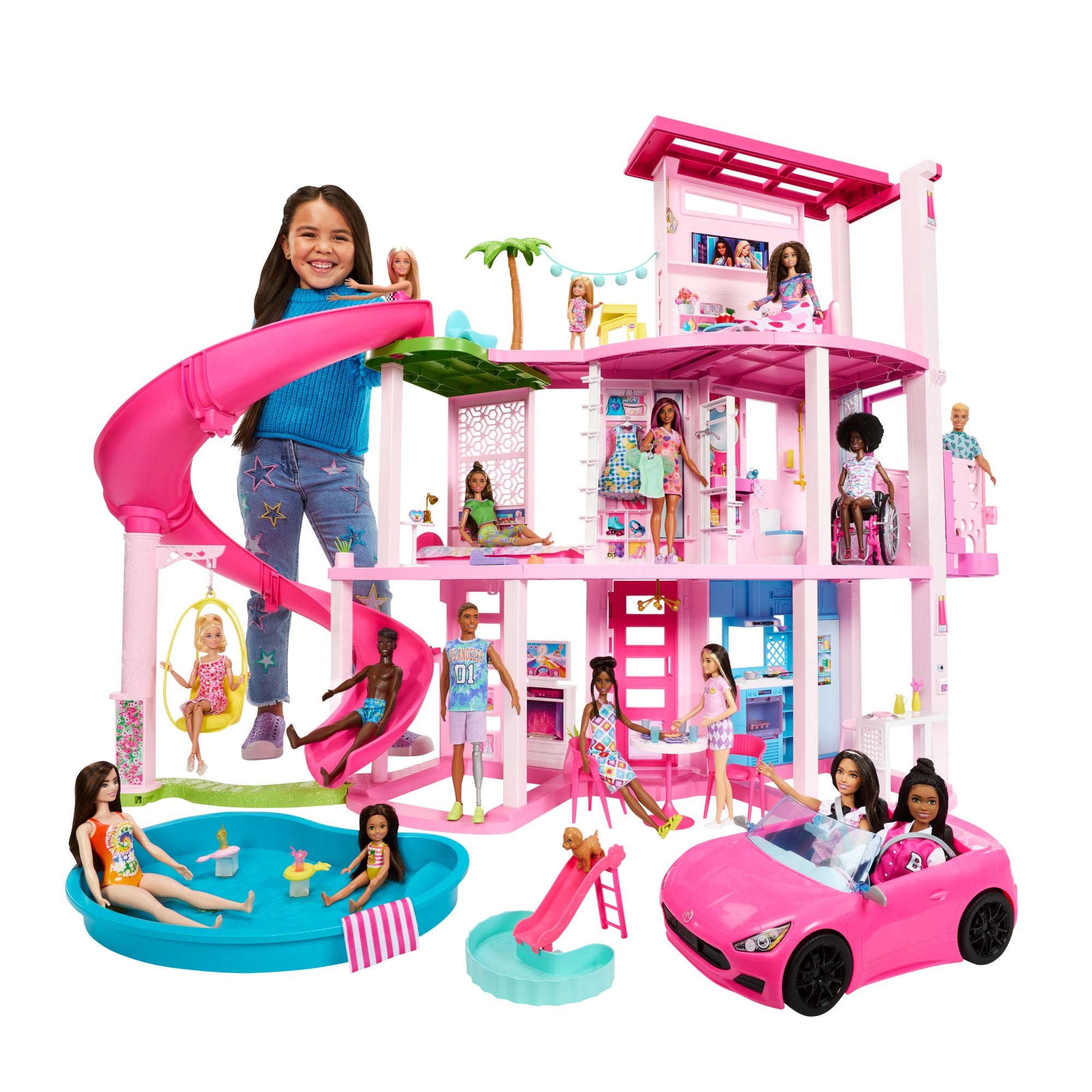
I've walked into dozens of playrooms where the parents are staring at a $200 piece of warped plastic and a $2,000 ruined hardwood floor, wondering where they went wrong. They bought a Barbie Doll House With Pool thinking it was a self-contained toy that would provide hours of independent play. Instead, they bought a plumbing nightmare in miniature. The mistake starts at the toy store. You see the bright pink box, you see the smiling kids in the marketing photos, and you assume the manufacturer has solved the basic physics of water displacement. They haven't. If you set this thing up on a rug or near expensive baseboards without a literal "flood plan," you're going to lose money. I’ve seen families have to replace entire sections of laminate because a five-year-old decided the "pool party" needed an extra gallon of water from the kitchen sink.
The False Promise Of The Barbie Doll House With Pool
The biggest lie in the dollhouse industry is that these items are indoor-safe by default. When you see a Barbie Doll House With Pool, the box shows a controlled environment. In reality, water travels. It follows the plastic seams, it wicks into the doll's hair, and it drips off the slide onto your floor. I’ve watched people spend three hours assembling 70+ pieces of plastic only to realize the "pool" doesn't have a secure drainage system. It’s a bucket. When your kid is done playing, they have to tip the entire structure or somehow bail out the water, which leads to spills 100% of the time.
If you don't treat this toy like a wet-room installation, you're failing before you start. The "fix" isn't to tell your kid to be careful. Kids aren't careful. The fix is a heavy-duty silicone boot tray or a waterproof utility mat placed under the entire footprint of the structure. I’ve seen parents try to use towels, but towels saturate. Once a towel is wet, it holds moisture against your flooring for hours, which is actually worse than a quick spill you wipe up immediately.
Forgetting The Gravity Of Drainage
Most people assume the slide and the pool are designed to work together perfectly. They aren't. In many versions of this play-set, the angle of the slide is just steep enough to cause a massive splash-back when the doll hits the water. This isn't just a minor annoyance; it’s a constant outward spray that hits walls and surrounding furniture.
The Physics Of The Splash Zone
I once consulted for a daycare that had three of these units. Within a month, the drywall behind the toys was soft to the touch. They hadn't accounted for the "micro-splashes" that happen every time a doll goes down the slide. You need at least 18 inches of clearance from any wall. If you push the toy right up against the baseboard to "save space," you're creating a mold trap.
The Drainage Disaster
I’ve seen people try to empty these pools by dragging the whole house to the bathtub. These houses are made of lightweight, snap-together plastic. They aren't built for structural integrity during transport, especially when weighted down with two liters of water. You'll snap a support beam or pop the elevator out of its track. Buy a $5 turkey baster. It’s the only tool that actually works for removing the water without moving the house. It sounds ridiculous until you’re the one trying to lift a four-foot-tall plastic mansion without spilling grey water on your white sofa.
Investing In The Wrong Scale
A common trap is buying furniture or accessories that don't actually fit the specific Barbie Doll House With Pool model you own. People go on Etsy or Amazon and buy "1:12 scale" miniatures because they look "more realistic" than the plastic stuff that comes in the box.
The problem is that Barbie isn't 1:12 scale. She's 1:6 scale (Playscale). If you buy the wrong size, the doll can't sit in the chairs, the plates look like coasters, and the whole "poolside experience" becomes a source of frustration for the child. I’ve seen parents drop $150 on "premium" wooden accessories that are half the size they need to be.
Before you buy a single extra item, take a ruler to the doll. A standard Barbie is about 11.5 inches tall. If your accessories are built for 5-inch dolls, you've wasted your money. Stick to the designated 1:6 scale. This is a non-negotiable rule of the hobby that beginners miss because they don't understand that "dollhouse" is a broad term covering everything from tiny collector's dioramas to large-scale toys.
The Myth Of One-Hour Assembly
I’ve seen relationships tested over the assembly of these mansions. The box might say "easy assembly," but if you haven't done this before, you're looking at two to three hours. The mistake is trying to do this on Christmas Eve or ten minutes before a birthday party.
The stickers are the real killer. Once you peel a sticker and touch it to the plastic, it’s there forever. If it's crooked, it stays crooked. I’ve seen $200 houses look like junk because the "wallpaper" stickers were applied in a rush and are full of air bubbles.
A Pro-Level Assembly Strategy
Don't use your bare hands for the stickers. Use a pair of tweezers to hold the edge and a credit card to smooth it down as you go. It sounds like overkill, but it's the difference between a toy that looks like a "hand-me-down" on day one and something that actually looks decent. Also, check the plastic tabs for "flashing"—those little bits of extra plastic left over from the mold. If you don't trim those off with a utility knife, the pieces won't click together properly, and the whole house will be wobbly. A wobbly house plus a full pool equals a flood. It's that simple.
Ignoring The Battery And Maintenance Cost
People focus on the sticker price of the house and forget the operational costs. The modern versions of these houses have "smart" features—lights, sounds, moving elevators. These things eat batteries. I've seen parents get frustrated because the "party mode" stops working after three days.
The Hidden Power Drain
If your kid leaves the "kitchen light" on, those tiny batteries die fast. We're talking $15 in specialty batteries every few weeks if you aren't careful. The fix is to invest in high-quality rechargeables from the start. Don't buy the cheap ones from the dollar store; they leak, and once a battery leaks inside a plastic toy, the acid eats the electronic contacts. I’ve had to throw away perfectly good houses because the battery compartment was a crusty mess of blue acid.
Water Quality Issues
If you leave water in that pool for more than 48 hours, it gets slimy. Kids have dirty hands. They put snacks in the pool. They put the dog in the pool. That water becomes a petri dish. I’ve seen kids get rashes because they played in three-day-old "doll water" that had turned into a swamp. You must empty and dry the pool after every single play session. There are no shortcuts here. If you think you'll "just do it tomorrow," you're setting yourself up for a gross, smelly toy.
Before And After: The Setup Reality
Let’s look at a "typical" versus "professional" setup.
The Wrong Way: You buy the house, haul it home, and snap it together on the living room carpet on a Friday night. You fill the pool to the "max fill" line using a pitcher. Your child plays for two hours, splashing water onto the carpet and the nearby fabric sofa. When play-time is over, you try to lift the house to carry the pool to the sink. The plastic flexes, the pool spills half its volume onto the rug, and the elevator mechanism gets wet. You spend the next hour scrubbing the carpet, but the backing stays damp, leading to a musty smell that lasts for weeks. The stickers start to peel because of the humidity, and the toy looks "beat up" within 48 hours.
The Right Way: You buy the house and a $20 silicone grill mat. You trim the flashing off the plastic tabs and apply the stickers using tweezers and a squeegee. You place the house on the mat, at least two feet away from any walls or absorbent furniture. You fill the pool only halfway—never to the "max" line. You keep a turkey baster and a dedicated microfiber cloth nearby. When the child is done, you suck the water out with the baster, wipe the pool dry, and check the mat for any stray drips. The house remains stable, the floor stays dry, and the toy looks brand new for years. You’ve spent an extra $25 and 30 minutes of prep time to save $2,000 in flooring repairs.
Why The "Smart" Features Fail
I’ve seen so many people complain that the elevator or the lights stopped working after a month. They blame the manufacturer, but the reality is usually "user error" regarding the water. These houses are designed with the pool on the bottom floor for a reason, but water still finds a way up.
Dolls get wet in the pool. Then the kid puts the wet doll in the elevator. The water drips into the elevator track, which is often where the mechanical or electrical components sit. Or they take the wet doll to the "bedroom" on the top floor, and the water seeps into the floorboards of the toy, which then drips down onto the electronics below.
If you're going to allow water play, you have to have a "drying station" rule. The doll doesn't leave the pool area until it has been dried with a towel. If you can't enforce that rule, don't put water in the pool. It sounds harsh, but it’s the only way to keep the toy functional for more than a season. I’ve seen $200 toys turned into "dumb" plastic shells because the electronics fried within the first week.
The Reality Check
Owning a house this size isn't a "set it and forget it" situation. It’s a piece of furniture that requires active management. If you don't have the space to keep it 24 inches away from your walls, don't buy it. If you aren't willing to spend five minutes after every play session bailing out water with a turkey baster, don't fill the pool.
The plastic is thinner than you think, the stickers are more fragile than you want, and the water is more destructive than you've been led to believe. Most people buy these for the "wow factor" on a birthday morning and then spend the next six months tripping over them and cleaning up puddles.
Success with this toy requires a level of discipline that most parents aren't prepared for. You're not just buying a toy; you're managing a small-scale water feature in your living room. If that sounds like too much work, stick to the version without the pool. Your floors, your wallet, and your sanity will thank you. There is no middle ground. You either run a tight ship with a waterproof barrier and a strict drying protocol, or you accept that you're going to be living with a damp, moldy, broken piece of plastic until you finally get fed up and haul it to the curb. That is the reality of the hobby. It's fun, it's iconic, but it's a relentless maintenance task disguised as a pink dream.